Land
Enclosure, conquest and forced dispossession can remove people’s access to land and commons. With independent livelihoods weakened, families may become dependent on landlords or wage employment.
LUKE 4:18 • PEOPLE POWER & GLOBAL LIBERATION
What would freedom mean if people remained hungry, dispossessed, underpaid or unable to obtain care?
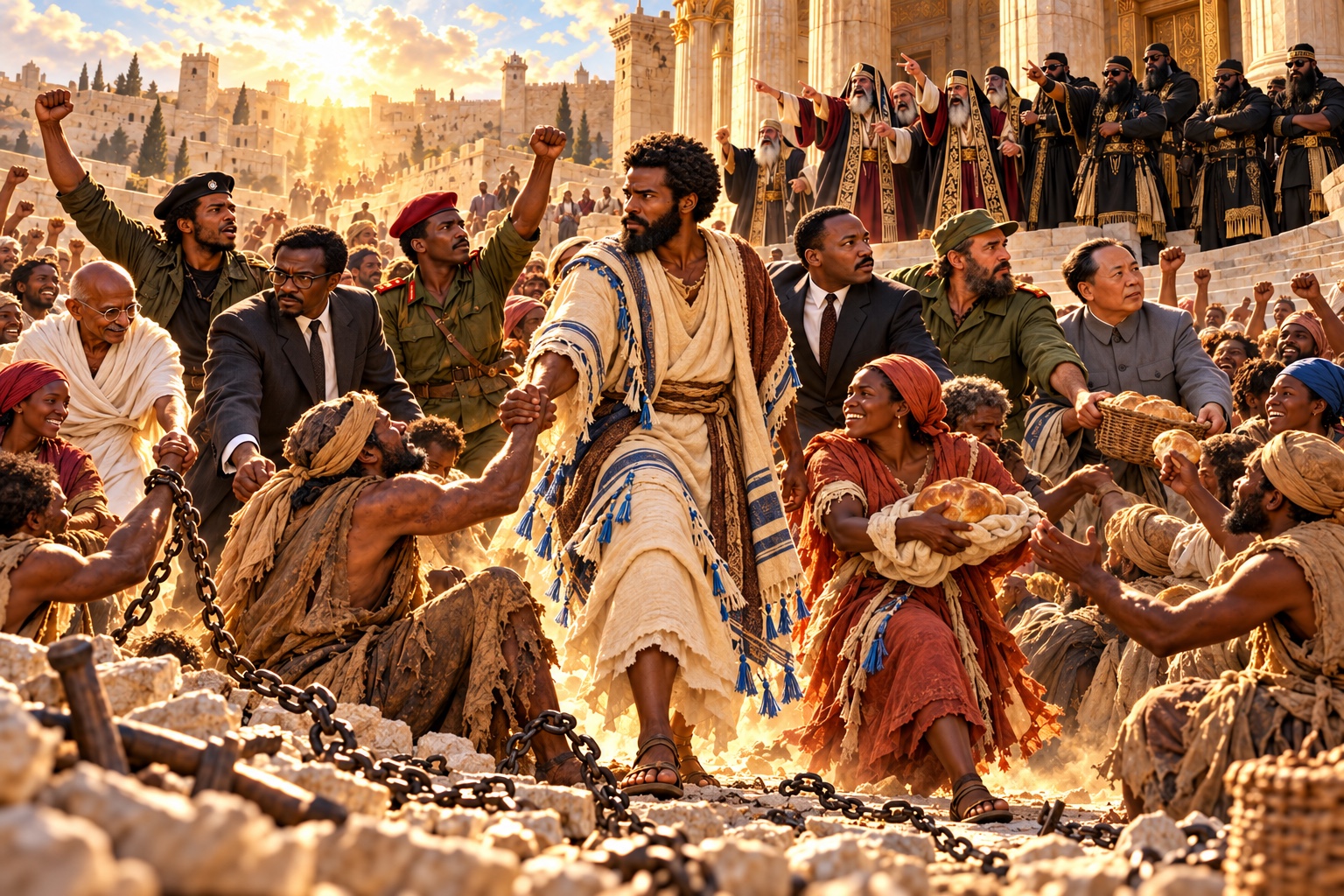
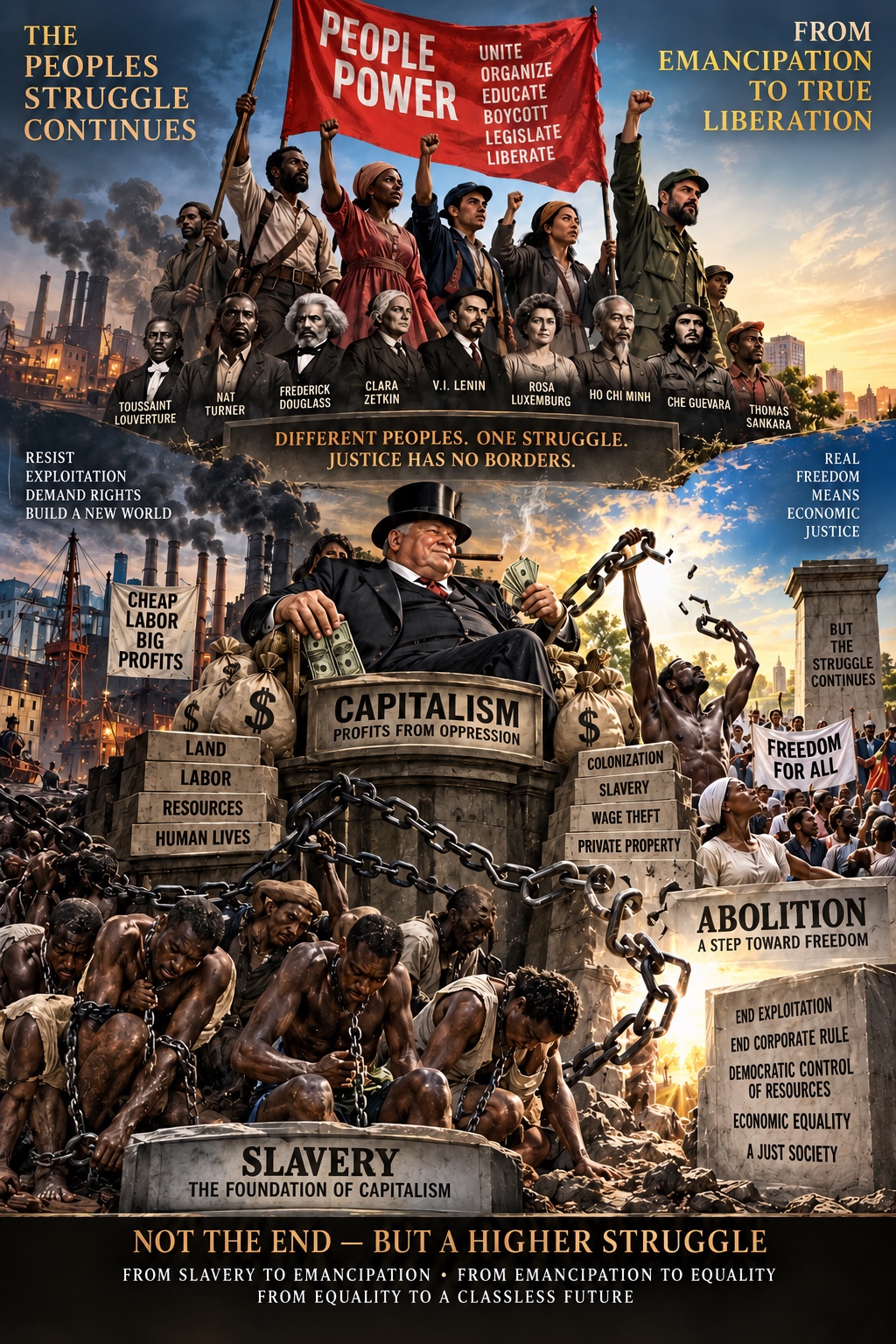
People power means liberation for the oppressed of every ethnicity and nation—including white working people. This study brings Luke 4:18 into conversation with abolitionists, socialist thinkers, independence leaders and community organizers across the world. Its focus is freedom from exploitation, hunger, dispossession and unjust rule.
LIBERATION IN PICTURES
01 / THE BIBLICAL FOUNDATION
Tap each scripture button to open the complete selected verses and a short explanation. The chapter button opens Bible Hub.
The Spirit of the Lord is upon me, because he hath anointed me to preach the gospel to the poor; he hath sent me to heal the brokenhearted, to preach deliverance to the captives, and recovering of sight to the blind, to set at liberty them that are bruised, To preach the acceptable year of the Lord.
Context: Jesus reads in the Nazareth synagogue. The passage draws on Isaiah’s language of release and restoration; read Luke 4:16–30 for the full episode.
Read the full chapter on Bible HubIs not this the fast that I have chosen? to loose the bands of wickedness, to undo the heavy burdens, and to let the oppressed go free, and that ye break every yoke? Is it not to deal thy bread to the hungry, and that thou bring the poor that are cast out to thy house? when thou seest the naked, that thou cover him; and that thou hide not thyself from thine own flesh?
Context: The prophet challenges religious observance practiced alongside exploitation. Material provision and ending oppression belong together.
Read the full chapter on Bible HubWoe unto them that decree unrighteous decrees, and that write grievousness which they have prescribed; To turn aside the needy from judgment, and to take away the right from the poor of my people, that widows may be their prey, and that they may rob the fatherless!
Context: The accusation targets rulers and the rules they make—not only private acts of unkindness.
Read the full chapter on Bible HubBehold, the hire of the labourers who have reaped down your fields, which is of you kept back by fraud, crieth: and the cries of them which have reaped are entered into the ears of the Lord of sabaoth.
Context: The immediate charge is fraudulent withholding of agricultural wages. Modern applications should distinguish wage theft from Marx’s broader account of surplus value.
Read the full chapter on Bible HubAnd they covet fields, and take them by violence; and houses, and take them away: so they oppress a man and his house, even a man and his heritage.
Context: Powerful people seize fields and homes. This is not a blanket claim that every personal possession is condemned.
Read the full chapter on Bible HubRestore, I pray you, to them, even this day, their lands, their vineyards, their oliveyards, and their houses, also the hundredth part of the money, and of the corn, the wine, and the oil, that ye exact of them.
Context: Debt, food shortages and loss of land provoke a public confrontation with nobles and rulers. The response includes actual restoration.
Read the full chapter on Bible HubNeither was there any among them that lacked: for as many as were possessors of lands or houses sold them, and brought the prices of the things that were sold, And laid them down at the apostles’ feet: and distribution was made unto every man according as he had need.
Context: This describes the Jerusalem believers’ community. It supplies a model of provision according to need, not a detailed blueprint for a modern national economy.
Read the full chapter on Bible Hub02 / FOLLOW THE MATERIAL CONDITIONS
From a scientific-socialist perspective, poverty is shaped by who controls productive land, workplaces, investment and government. The question is not simply whether an owner is generous. It is whether people have power over the conditions of their lives.
Enclosure, conquest and forced dispossession can remove people’s access to land and commons. With independent livelihoods weakened, families may become dependent on landlords or wage employment.
Workers sell their capacity to work. Owners control production and its surplus. Low pay, insecure employment and weak bargaining power can deepen dependence; wage theft adds a separate injustice.
Unsafe work, poor housing and inadequate sanitation create illness. Fees, exclusion and unequal access can then prevent care. Healthcare is also a field of healing and skilled labor; the issue here is how access and priorities are organized.
Rules can protect workers and communities—or enforce dispossession, racial exclusion and unequal bargaining power. Changing an unjust rule can matter immediately, while deeper struggles concern who makes the rules.
Conquest and empire existed before modern capitalism. Later capitalist empires integrated coercion, plantations, mining and global trade. The forms differ, but loss of land, labor and self-rule can recur.
03 / VISUAL STUDY
People below the official poverty threshold, millions. Bars begin at zero.
Source: U.S. Census Bureau, 24 Million Americans—Poverty in the United States: 1969 (1970). Earlier totals are calculated from the report’s stated declines: 24.3 + 15.2 = 39.5; 24.3 + 1.1 = 25.4. Historical official measure; these are counts, not poverty rates.
Poverty declined, yet millions still lacked sufficient income. These totals cover the U.S. population across ethnic groups. They illustrate one national setting within a global study; they do not measure any movement’s impact or represent worldwide poverty.
Read the Census reportImagine a working day producing $200 in new value:
In Marx’s model, labor creates new value beyond the value of labor power paid as wages. Owners appropriate the surplus, from which different incomes and claims can be met.
Teaching example only—not measured data. Materials and machinery transferred into the product are excluded from this new-value illustration. Surplus value is not the same thing as a firm’s final accounting profit.
| Struggle | People studied | What freedom requires |
|---|---|---|
| Ending human ownership | Harriet Tubman, Sojourner Truth | Release from enslavement, enforceable rights and means to live independently |
| Control over work and wealth | Marx, Engels, Haywood, Du Bois | Workers’ organization, access to resources and an end to exploitation |
| Independence from domination | Lenin, Fanon, Malcolm X, Rodney, Nkrumah, Kenyatta | Self-rule that changes everyday economic conditions |
| Revolution and social provision | Mao, Che Guevara, early Fidel Castro, Sankara | Land, food, education, healthcare and participation |
| Popular authority and state power | Stalin, Gaddafi | Test claims of liberation against actual freedom, accountability and public control |
| Collective survival and solidarity | Newton, Seale, Hampton | Meet needs while building lasting organization across communities |
An analytical comparison, not a claim of one unbroken line of influence or universal agreement.
Back to the TopPROFILE 01 / c. 1797–1883 • United States
Dignity, freedom and equal rights
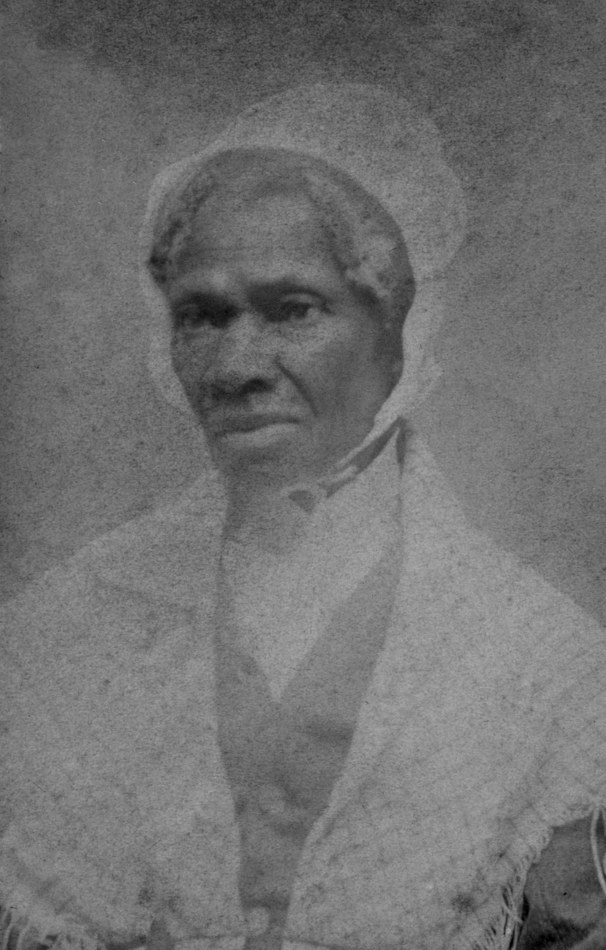
Truth was born enslaved in New York and became an abolitionist, religious speaker and advocate for women’s rights. Her struggle confronted both slavery and exclusion from equal civic standing.
She used public testimony, organizing and legal action. After her son was illegally sold out of New York, she successfully fought for his return. She also worked for the welfare and opportunities of formerly enslaved people.
Her example shows that liberation needs a public voice, enforceable rights and practical support. She was not a scientific-socialist theorist. Accounts of her famous 1851 speech differ; later retellings should not automatically be treated as exact transcripts.
Narrated life history, recorded by Olive Gilbert
Narrative of Sojourner Truth
1850
Read her account of enslavement, escape and the struggle to recover her son. Gilbert recorded and shaped the narrative; this is not an unmediated transcript.
Open source materialPROFILE 02 / c. 1822–1913 • United States
Freedom requires organized rescue
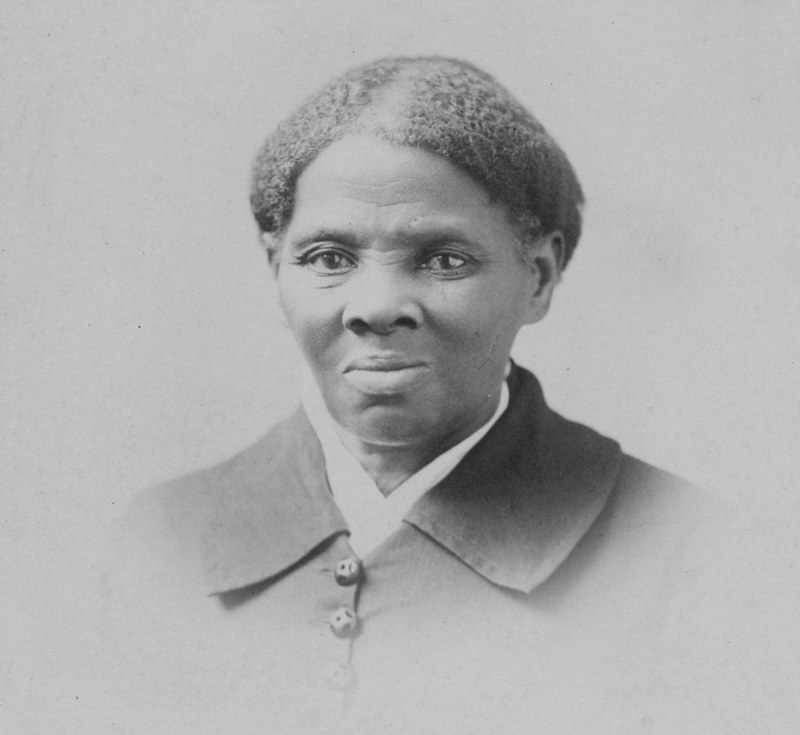
Tubman escaped enslavement in Maryland and returned repeatedly to help others escape. The system she confronted legally treated enslaved people—principally people of African descent in this setting—as property and appropriated their labor.
She worked through Underground Railroad networks, served the Union during the Civil War and helped guide the Combahee River Raid that freed more than 700 enslaved people. Her later work included women’s suffrage and care for vulnerable older people.
Tubman demonstrates practical solidarity: courage joined to planning, trusted networks and material assistance. She was an abolitionist, not a Marxist theorist. Her inclusion connects the end of human ownership to the wider struggle for liberation.
Contemporary biography by Sarah H. Bradford
Scenes in the Life of Harriet Tubman
1869
Read testimony and recollections about escape, rescue networks and wartime service. Bradford drew on Tubman’s accounts; Tubman did not write this book herself.
Open source materialPROFILE 03 / 1818–1883 • Europe
Who owns what workers produce?
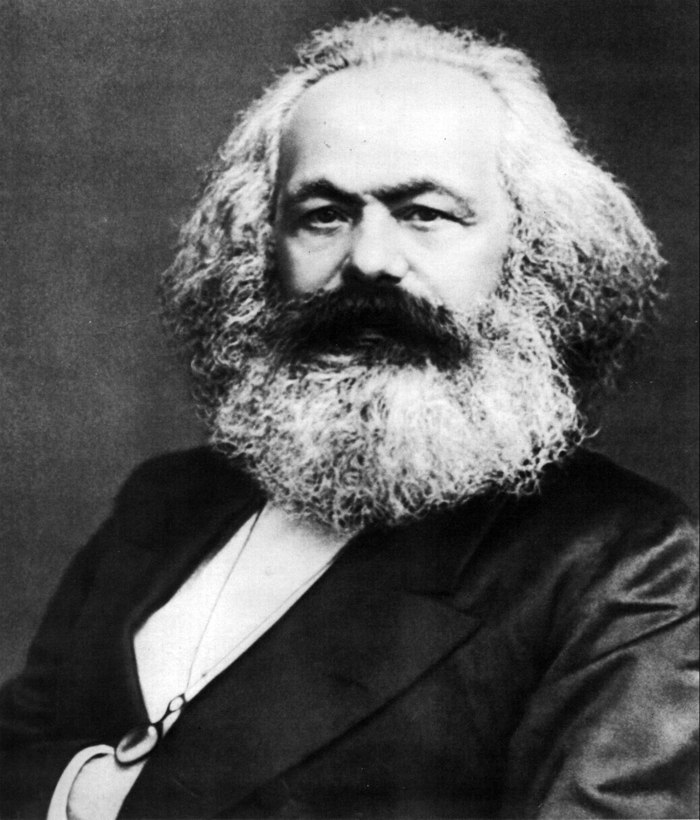
Marx analyzed capitalism as a system in which owners control productive assets and workers generally must sell their capacity to work to obtain a livelihood.
He argued that profit rests on workers producing more value than the value of their labor power. He also traced how expropriation separated agricultural people from land and independent means of living.
His critique goes beyond dishonest employers: exploitation, in his theory, can occur even when the agreed wage is paid. This is distinct from the specific wage fraud condemned in James.
Primary text • book chapter
Capital, Volume I, Chapter 27: Expropriation of the Agricultural Population from the Land
1867
Study how loss of land and common rights can force people into dependence on wage employment.
Open source materialPROFILE 04 / 1820–1895 • Germany / Britain
Poverty is also a health question
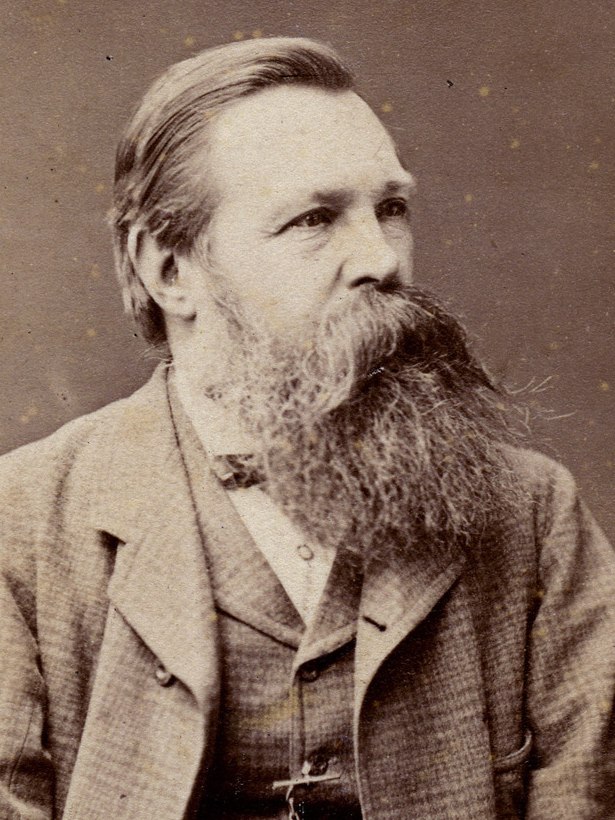
Engels examined industrial workers’ housing, sanitation, workplace conditions and insecurity in nineteenth-century England. He collaborated with Marx in developing socialist theory.
His account treated sickness and early death as outcomes shaped by social conditions, not simply individual choices. Dirty water, overcrowding and dangerous work could make wealth for some while damaging others.
This connects labor and housing to public health. His historical observations should be read in their setting; they are not present-day medical statistics or a complete description of every capitalist economy.
Primary text • book
The Condition of the Working Class in England
1845
Begin with The Great Towns and Results to examine connections between housing, work and health.
Open source materialPROFILE 05 / 1868–1963 • United States / international
Freedom must include economic democracy
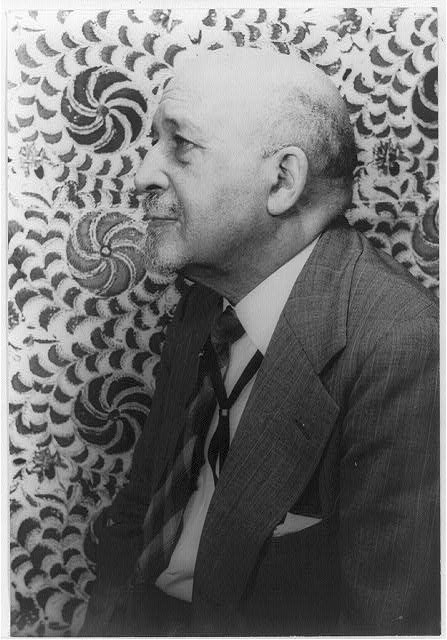
Du Bois was a scholar and activist whose work connected democracy, labor, imperialism and peace. His political views developed over a long life, increasingly toward socialism.
Black Reconstruction (1935) examined slavery’s overthrow and the struggle over labor, citizenship and democracy afterward. In that U.S. history, racial exclusion divided workers and restricted the freedom of formerly enslaved people. His later activism also addressed colonial domination and war.
For this study, the lesson is that emancipation requires institutions that make freedom usable: education, economic security and political power. Workers’ solidarity must confront the actual barriers that prevent people from organizing together.
Primary source • speech published in The American Socialist
If Eugene Debs Returned
Published January 1956
Compare Du Bois’s reflections on socialism, democratic action and the labor movement.
Open source materialPROFILE 06 / 1870–1924 • Russia / Soviet Union
National freedom and international solidarity
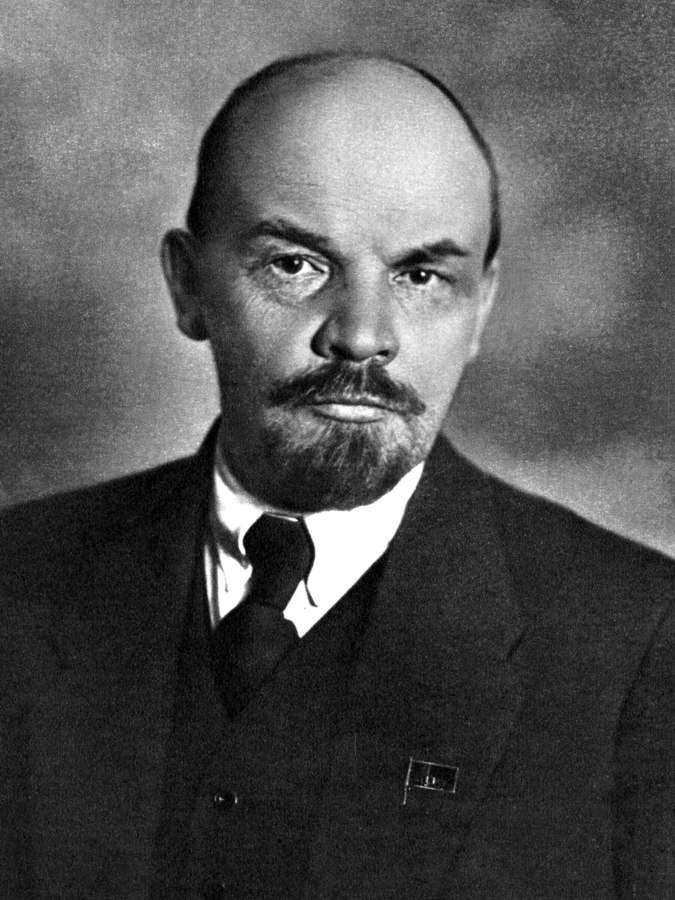
Lenin argued that socialists should oppose imperial domination and defend oppressed nations’ right to self-determination, including political separation.
His writings sought to connect the struggle of workers with struggles against national oppression. They influenced liberation movements and socialist debates across many countries.
A right to choose independence was not a claim that separation was always the best strategy. His government also developed coercive institutions and restricted political opposition; liberation claims must be tested against actual power.
Primary text • political theses
The Socialist Revolution and the Right of Nations to Self-Determination
1916
Study the relationship between workers’ solidarity and opposition to the domination of one nation by another.
Open source materialPROFILE 07 / 1878–1953 • Soviet Union
The national question—and the danger of state oppression
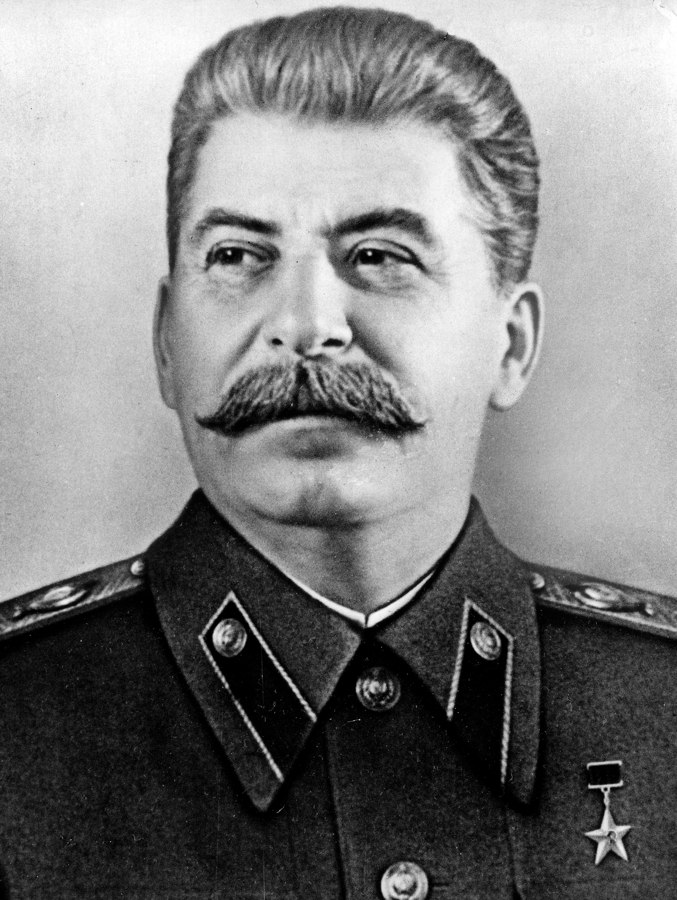
Stalin’s 1913 writing defined a nation through historically developed language, territory, economic life and culture. It became part of the framework studied by Communist movements.
This framework influenced debates about independence and self-rule among oppressed peoples. Studying its influence does not mean endorsing Stalin’s government or treating its policies as a universal path to liberation.
His rule combined industrial expansion with forced collectivization, political terror, forced labor and repression. These are not minor exceptions to a liberation study: they show why state ownership alone cannot guarantee freedom or justice.
Primary text • essay
Marxism and the National Question
1913
Read the historical argument about nations and self-determination, then compare the theory with the archival material on government practice below.
Open source materialPROFILE 08 / 1898–1985 • United States
Land, livelihood and working-class power
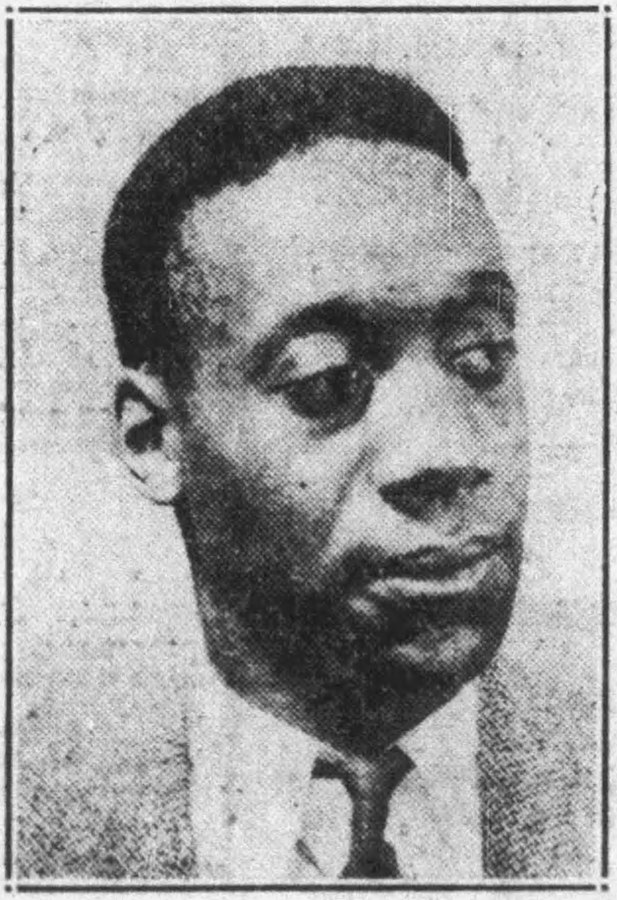
Haywood was a Communist organizer and writer who connected freedom to control over land, working conditions and political institutions. His U.S. setting included the plantation economy and laws denying equal rights to Black workers and farmers.
He linked Southern poverty to slavery’s unfinished overthrow, concentrated landownership, sharecropping and Jim Crow. He argued that workers needed both economic transformation and the removal of oppressive legal barriers.
The lesson for this study is that legal freedom can remain incomplete when people lack land, secure livelihoods and effective political power. His specific territorial proposals were contested; solidarity does not require every movement to adopt the same program.
Primary text • book chapter
Negro Liberation, Chapter 7: The Negro Nation
1948
The original title uses historical terminology. Examine the concrete relationship between land, labor, legal inequality and self-rule in the U.S. South.
Open source materialPROFILE 09 / 1893–1976 • China
Serve the people
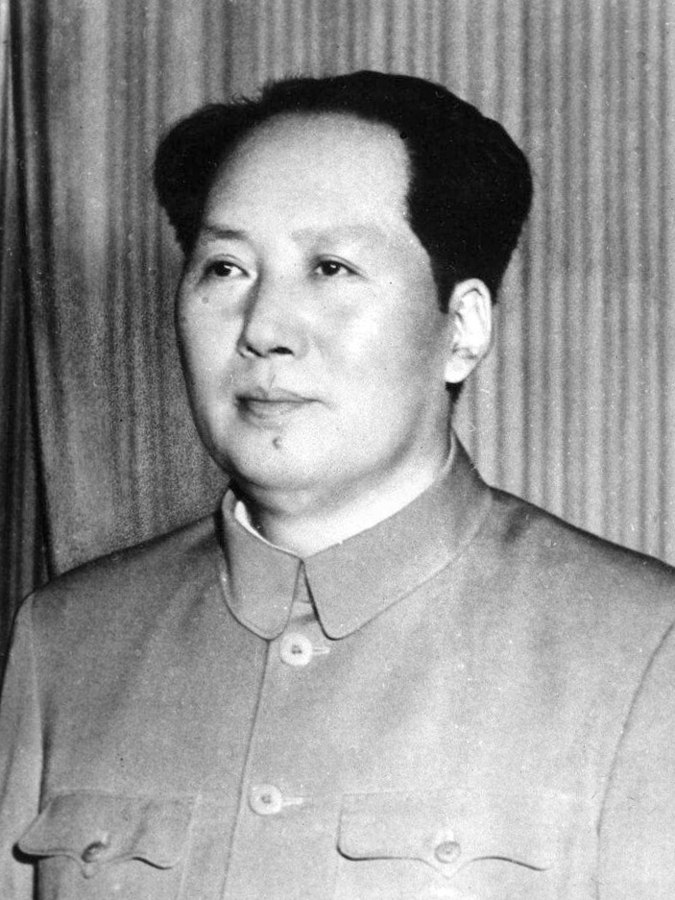
Mao led a peasant-centered Communist revolution and argued that revolutionary organization should be rooted in the needs and participation of ordinary people.
His “Serve the People” address became influential beyond China, including among the Black Panthers. It emphasized public service and willingness to hear criticism.
The influence of this principle must be distinguished from the record of Mao’s rule. The Great Leap Forward contributed to catastrophic famine; the Cultural Revolution brought persecution and upheaval. Popular participation needs protections against coercion.
Primary source • speech
Serve the People
8 September 1944
Read the case for public service, responsibility and accepting criticism. Compare those standards with the historical record.
Open source materialPROFILE 10 / 1909–1972 • Ghana / international
Independence must reach the economy
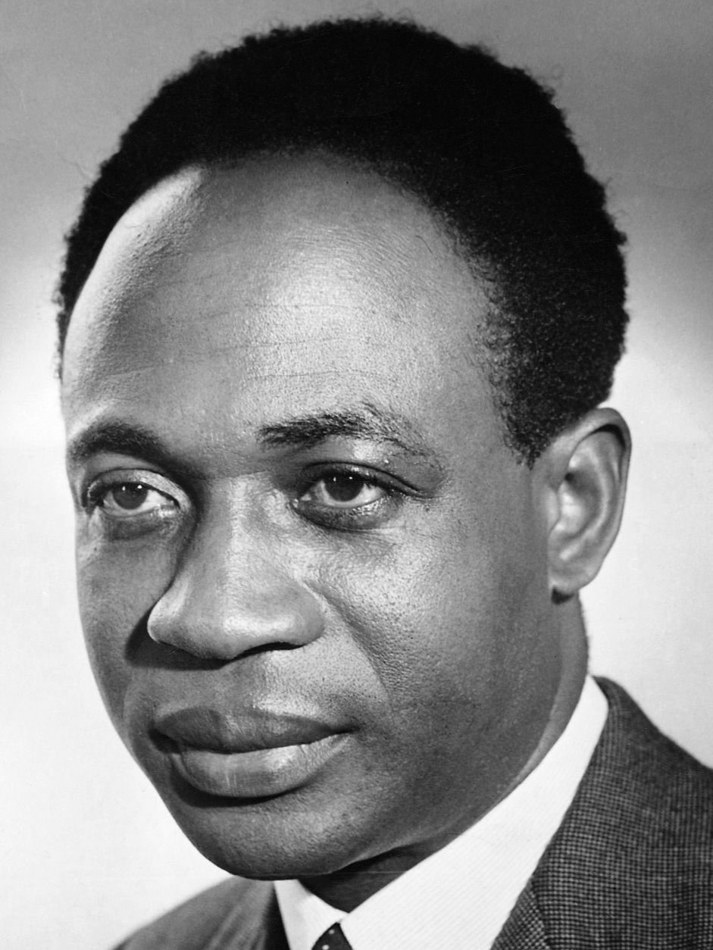
Nkrumah led Ghana to independence in 1957 and argued that political sovereignty remained vulnerable when finance, trade and investment were controlled from outside. He advocated socialism and cooperation among African states.
In Neo-Colonialism (1965), he described how a formally independent country could still have its economic choices constrained by foreign capital and external power. His argument connected national liberation to global structures of wealth.
The key study question is whether independence gives ordinary people effective control of resources. Nkrumah’s socialist vision does not eliminate questions about concentrated executive power; economic sovereignty and democratic accountability must be examined together.
Primary text • book, chapter links
Neo-Colonialism, the Last Stage of Imperialism
1965
Start with the introduction: how can external economic control persist after formal independence?
Open source materialPROFILE 11 / c. 1897–1978 • Kenya
Political independence and the unfinished land question
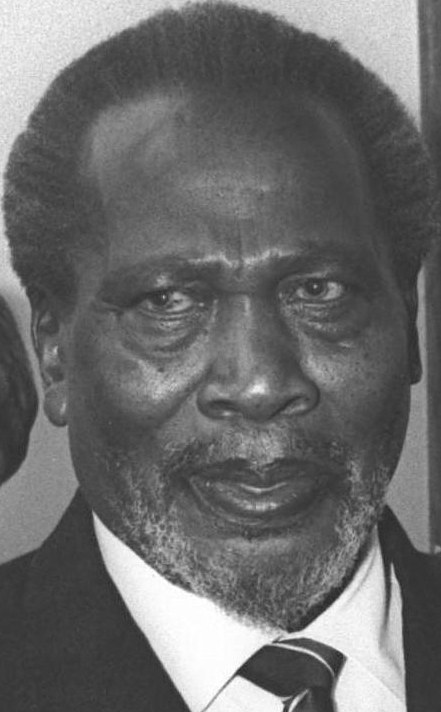
Kenyatta was a central Kenyan independence leader and the country’s first president. The struggle he represented confronted British colonial rule, land alienation and unequal political rights.
His government pursued development through a mixed economy with a substantial role for private enterprise. The policy called African Socialism in 1965 did not amount to Marxist transformation of ownership. Land and the distribution of opportunity remained contested after independence.
Kenyatta belongs here as an anti-colonial independence figure, not as an equivalent of Marx or Sankara. His case asks whether replacing colonial rule also changes the distribution of land and power for poor people.
Primary source • archival speech and PDF
Speech on the Fourth Anniversary of Independence, Jamhuri Day
12 December 1967
Open the PDF listed under File to read the speech. Compare the government’s account of independence with the research on land and development below.
Open source materialPROFILE 12 / 1925–1961 • Martinique / Algeria
Decolonization must change ordinary life
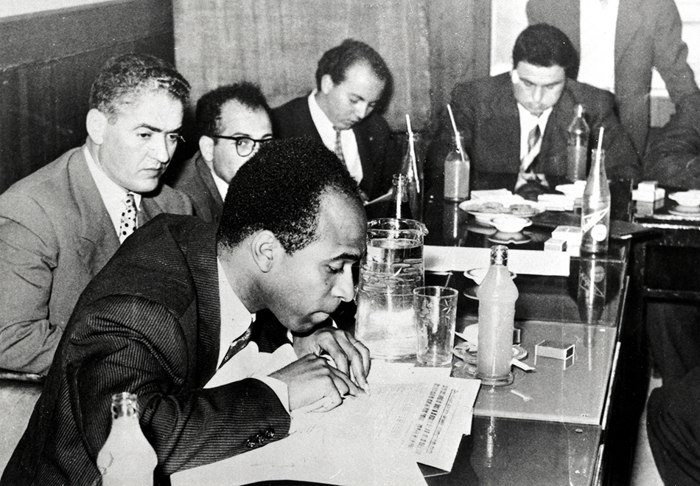
Fanon was a psychiatrist and anti-colonial writer associated with Algeria’s liberation struggle. He examined how colonial rule damaged dignity, political freedom and social life.
He argued that liberation could not end with replacing foreign rulers with a local elite. The distribution of power and the participation of ordinary people remained decisive.
His work influenced anti-colonial movements and organizers beyond Algeria. His discussion of revolutionary violence is historically important and contested; it is not a substitute for examining consequences or protecting human life.
Primary text • translated book chapter
The Wretched of the Earth: The Pitfalls of National Consciousness
1961
Examine Fanon’s warning that a new national elite can reproduce exploitation after colonial rule ends.
Open source materialPROFILE 13 / 1925–1965 • United States / international
Self-determination and human rights
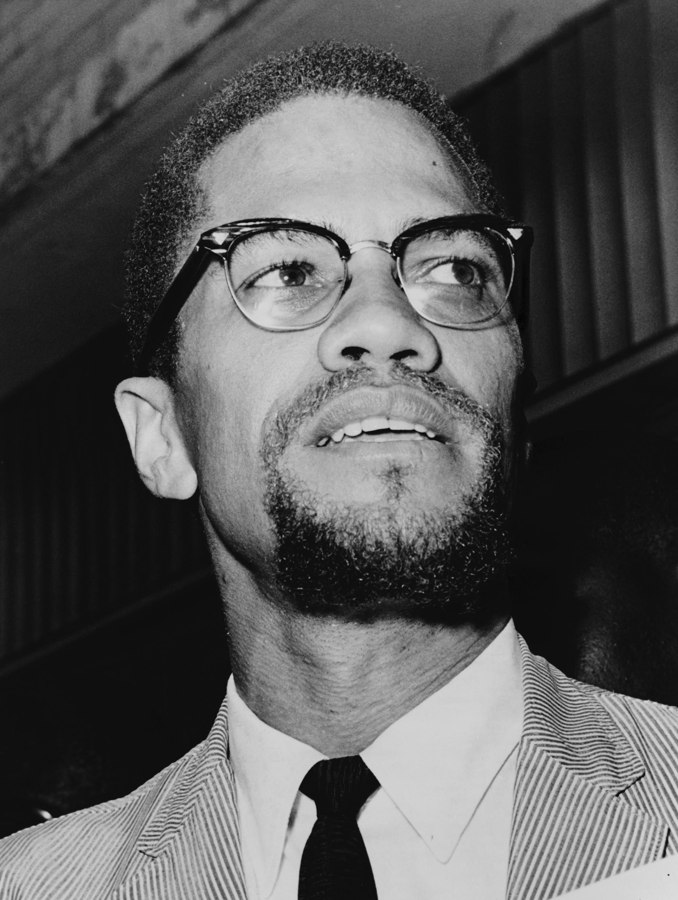
Malcolm X challenged oppression and insisted that people should control the decisions affecting their communities. In the United States, he confronted segregation and violence directed at Black Americans; his later work increasingly emphasized international human rights.
In his later years he connected U.S. racism to the liberation struggles of Africa and Asia and sought to frame oppression as a human-rights issue before the world.
He belongs here as an independent revolutionary voice. His criticism of capitalism and colonialism offers a basis for comparing struggles across borders. He did not adopt a settled Marxist program or share every position of the Communist movement.
Primary source • interview in a scanned magazine (PDF)
Interview with the Young Socialist
Published March–April 1965
Read the interview in its original publication setting and compare Malcolm X’s developing international outlook with the profile’s discussion of human rights.
Open source materialPROFILE 14 / 1926–2016 • Focus: Cuba, 1953–1959
Land, housing, work, education and health
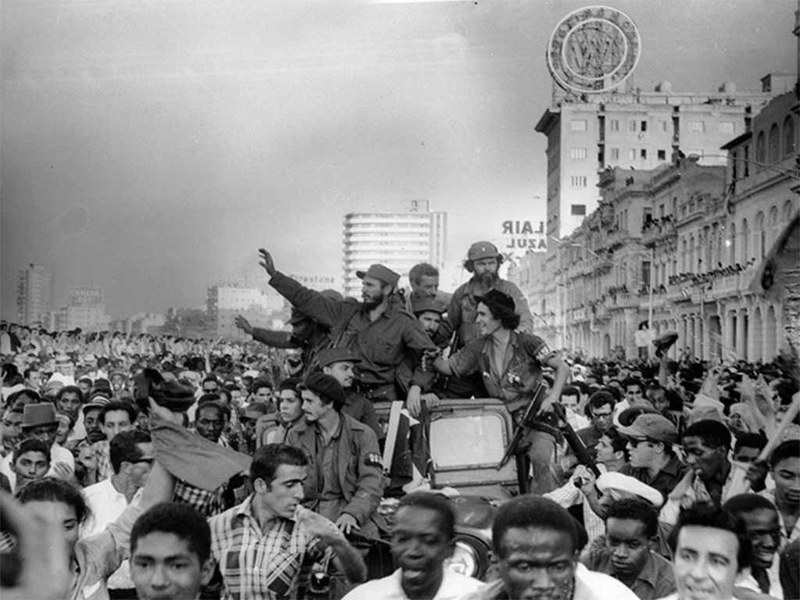
The early Castro-led movement fought the Batista dictatorship and promised a transformation of everyday conditions. This profile focuses on the revolutionary program leading to the victory of 1959.
In History Will Absolve Me, the published defense associated with his 1953 trial, Castro identified land, industrial development, housing, unemployment, education and public health as urgent problems, alongside civil liberties and political democracy.
The program tied political freedom to material needs. It should be read in its own period: the early movement was broader than an explicitly Marxist-Leninist program, and Castro’s formal socialist declaration came later. Stated promises and later outcomes require separate evaluation.
Primary text • published trial defense
History Will Absolve Me
1953
Identify the early program’s demands concerning land, housing, work, education and health. This text is associated with Castro’s trial defense and its subsequent publication.
Open source materialPROFILE 15 / 1928–1967 • Argentina / Cuba / international
Solidarity beyond national borders
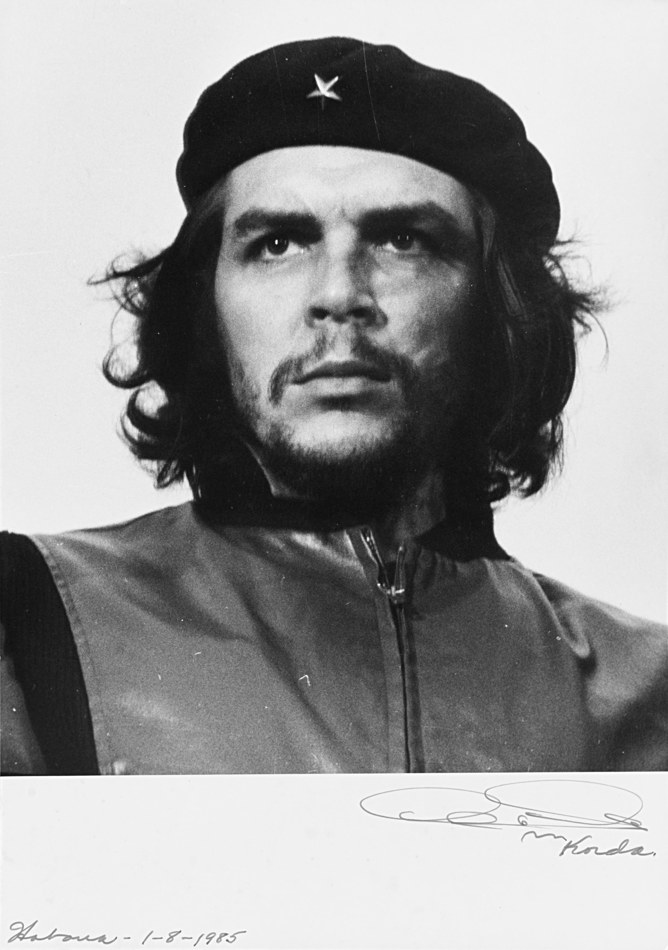
Guevara was an Argentine physician who became a leader in the Cuban Revolution. He connected poverty and unequal access to care with the organization of land, production and political power.
He advocated socialist transformation, political education and international solidarity. In Socialism and Man in Cuba (1965), he considered how collective responsibility and participation might replace production organized primarily around private gain.
His importance here is the insistence that people’s needs should shape economic life. His armed strategy and exercise of revolutionary power also raise questions about consent, coercion and how emancipation is judged in practice.
Primary text • essay/letter
Socialism and Man in Cuba
March 1965
Study the relationship between economic organization, participation and collective responsibility.
Open source materialPROFILE 16 / 1942–2011 • Libya • Focus: political and economic volumes, 1975–1977
Who controls government and production?
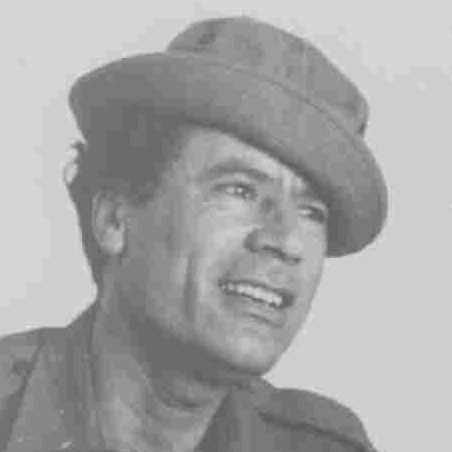
Gaddafi’s Green Book presented his Third Universal Theory. The first volume appeared in 1975 and the economic volume in 1977. It proposed popular congresses and committees in place of conventional parliamentary representation.
Its economic argument rejected permanent wage dependence and proposed that producers should be partners in production. It linked freedom to meeting basic needs and limiting control of those needs by others. These were Gaddafi’s proposals, not established descriptions of universal practice.
His theory differed from Marxism and must be distinguished from Libya’s actual government. Documented restrictions on expression and political association show why claims of popular authority need independent scrutiny. A people-power standard requires the ability to criticize those who govern.
Primary text • political-economic treatise
The Green Book, Part II: The Solution of the Economic Problem—Socialism
1977
Examine the proposal to make producers partners rather than wage-earners. Distinguish the author’s theory from evidence about its implementation.
Open source materialPROFILE 17 / 1942–1980 • Guyana / Caribbean / Tanzania
Underdevelopment is a relationship of power
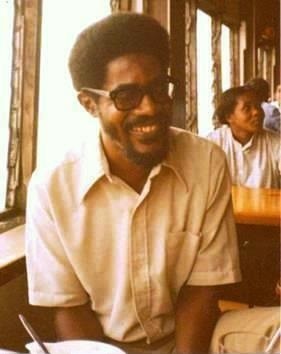
Rodney was a historian and working-class organizer. In How Europe Underdeveloped Africa (1972), he argued that slavery, colonial extraction and unequal economic relationships helped enrich dominant centers while obstructing development elsewhere.
In Guyana, he worked with the Working People’s Alliance to overcome ethnic divisions and organize against authoritarian rule. Teaching and discussion with ordinary people were central to his practice.
His work asks who benefits when wealth leaves a community or country. His organizing offers a direct example of people power across ethnic lines: workers can oppose both foreign domination and exploitation by their own governing elites.
Primary text • political analysis
Marxism and African Liberation
1975
Study Rodney’s discussion of class analysis and liberation in a specific historical setting, then connect it to his wider account of global exploitation.
Open source materialPROFILE 18 / 1949–1987 • Burkina Faso
Basic needs before elite privilege
Sankara led Burkina Faso from 1983 to 1987 and framed revolution around the needs and participation of ordinary people. He challenged dependence, elite privilege and the subordination of women.
His speeches connected hunger, health, education and production to political independence. In his 1987 appeal on debt, he urged African governments to act together against external financial domination rather than face creditors in isolation.
His example connects everyday provision to the international economy. His debt argument is a political analysis, not proof that every loan has identical effects. Evaluate revolutionary programs by both their material results and the voice available to the people affected.
Primary source • translated speech to the Organization of African Unity
A United Front Against Debt
29 July 1987
Read the call for collective action on debt and compare economic independence with the needs of ordinary people.
Open source materialPROFILE 19 / 1942–1989 • Oakland, United States
Community survival and structural change
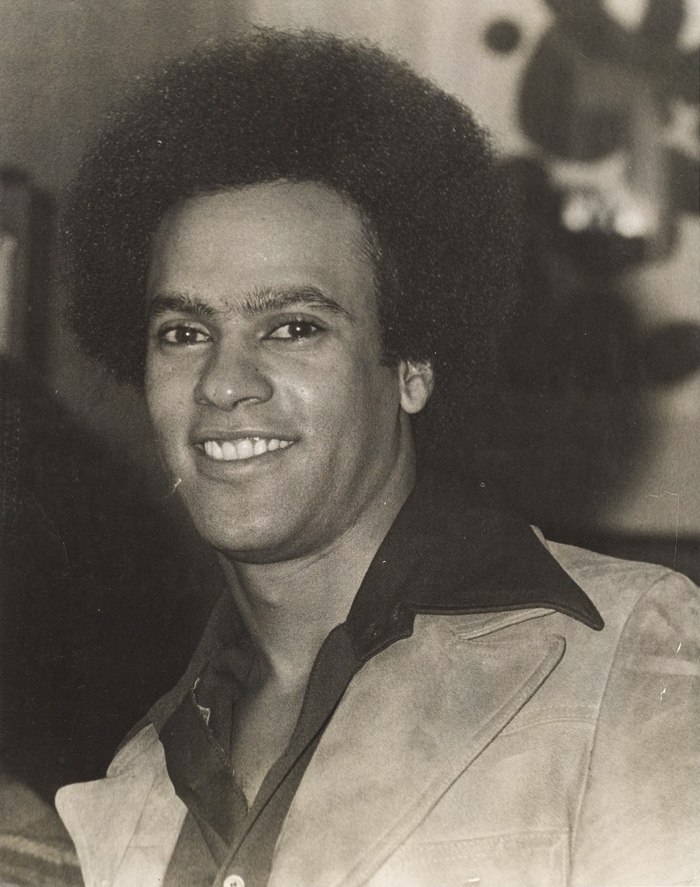
Newton co-founded the Black Panther Party with Bobby Seale in 1966. The organization confronted police brutality and poverty in U.S. communities and developed a revolutionary critique of capitalist power.
Its program called for employment, decent housing, education and an end to police brutality. Free breakfast, community health clinics and sickle-cell testing addressed daily needs while building political organization. Newton’s analysis later developed toward intercommunalism.
The Panthers made survival a political question: who controls the resources needed to live? Study both their service and their internal conflicts; an organization’s emancipatory program does not exempt its leadership from accountability.
Primary text • program co-authored with Bobby Seale
The Ten-Point Program
15 October 1966
Read the demands for employment, housing, education and justice as a concrete organizing program. This is a joint party document, not solely Newton’s writing.
Open source materialPROFILE 20 / Born 1936 • Oakland, United States
Turn demands into organization
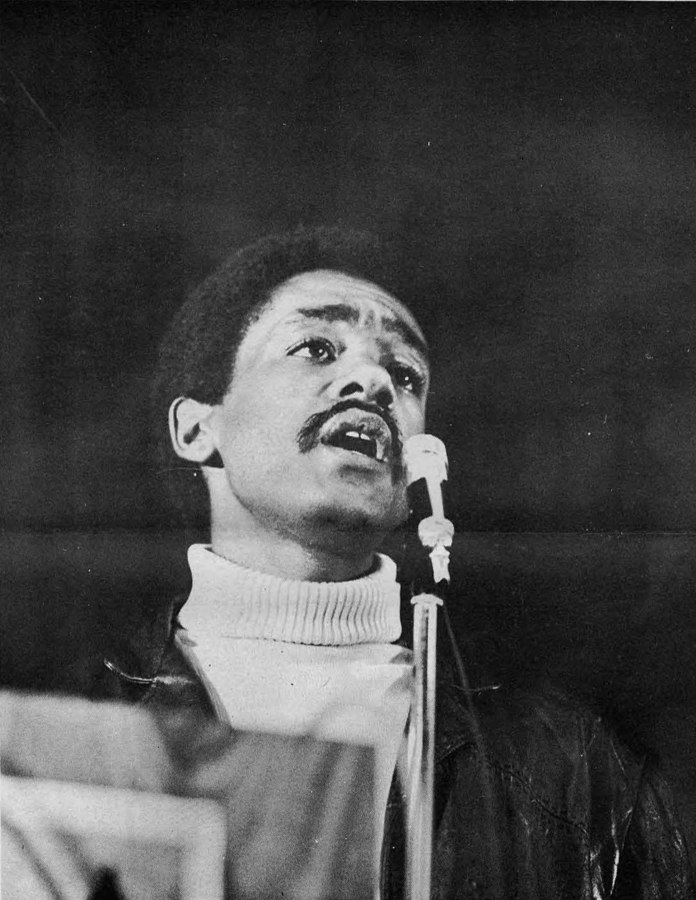
Seale co-founded and chaired the Black Panther Party. He helped translate community grievances into a public program of concrete demands.
The Ten-Point Program connected jobs, housing, education, justice and political power. Party organizing and survival programs put those demands into public life.
His example helps distinguish a slogan from an organization: a demand needs people, resources and sustained work. The party’s history also includes repression, strategic disagreements and internal conflict.
Primary text • program co-authored with Huey P. Newton
The Ten-Point Program
15 October 1966
Trace how community grievances become specific demands. Read alongside Seale’s organizing role; authorship of the program is shared.
Open source materialPROFILE 21 / 1948–1969 • Chicago, United States
People power through working-class solidarity
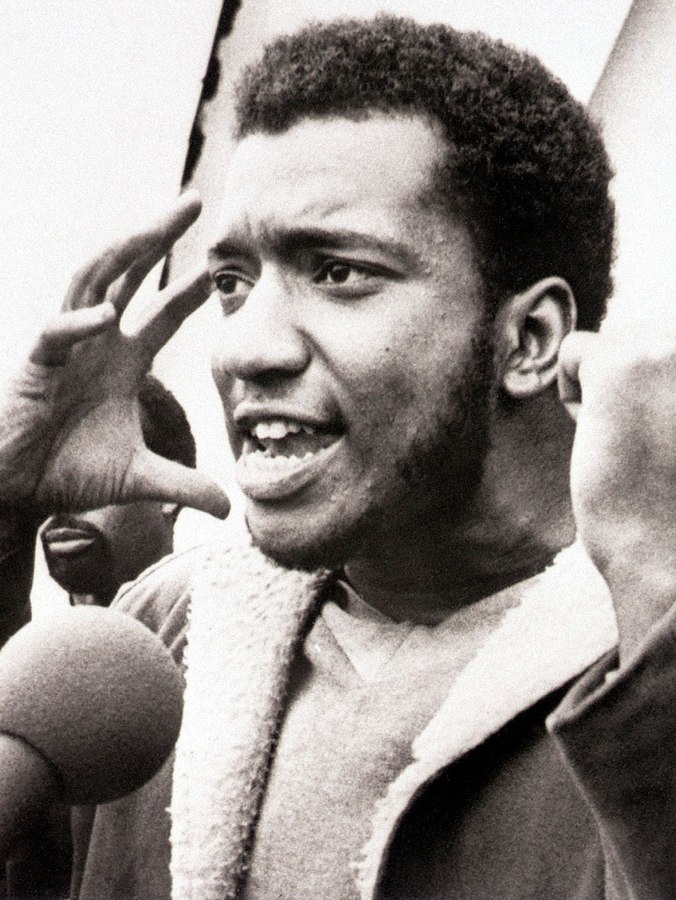
Hampton was an Illinois Black Panther leader who linked revolutionary socialism with practical community service and solidarity among poor and working people.
He helped build the original Rainbow Coalition with the Young Lords and Young Patriots, bringing together Black, Puerto Rican and poor white organizers in Chicago. They worked on shared problems of housing, hunger, police violence and exclusion from political power.
He was killed in a police raid in December 1969. His coalition shows how people facing different forms of oppression can organize around common material needs without denying one another’s experiences.
Primary source • speech transcript
It’s a Class Struggle, Godamnit!
November 1969
Study the argument for solidarity against exploitation and the relationship between political education and practical organization. The original title and transcript contain strong language.
Open source materialFURTHER STUDY / SOURCE DIRECTORY
Choose a name to jump to the source material beneath that profile. Each entry identifies the work, date and type of source. Original historical titles are preserved. A primary source tells us what its author argued; it does not by itself prove every claim.
Back to the Top04 / FROM STUDY TO PRACTICE
A liberation-centered reading of Luke 4:18 asks whether good news becomes real freedom in people’s lives—across all ethnicities, nations and borders.
Solidarity includes white workers and every other exploited population. It starts with shared needs: food, shelter, health, meaningful work, freedom from coercion and a voice in collective decisions. Historical context explains how oppression operates; it does not limit who deserves liberation.
Isaiah 58 commands release and material care. Nehemiah 5 demands restoration. James 5 exposes stolen wages. Acts 4 describes distribution according to need. Together they provide a strong biblical basis for confronting oppression rather than merely explaining it.
The historical figures in this study disagreed about parties, nations, violence, religion, democracy and the state. They did not command one common biblical solution. The synthesis below draws on recurring commitments to organization, self-determination and material change, while judging every movement by its treatment of people.
Let affected workers, tenants and patients define the problem. Record withheld wages, displacement, barriers to care and unequal treatment.
Build food support, transportation, education and care networks open to people across ethnic and national backgrounds. Involve the people receiving support in decisions.
Develop unions, tenant associations, cooperatives and community coalitions. Connect immediate demands to control over resources.
Pursue restitution, fair labor conditions, secure housing, accessible healthcare and democratic control of essential services. Ask whether a reform changes the power that produced the harm.
Protect dissent, shared decision-making and equal rights for everyone. Oppression is not excused by a government’s socialist label or a movement’s religious language.
Are people better fed, securely housed, fairly treated, able to obtain care—and empowered to shape the institutions governing their lives?
Return to the biblical foundation


