Land & Jubilee
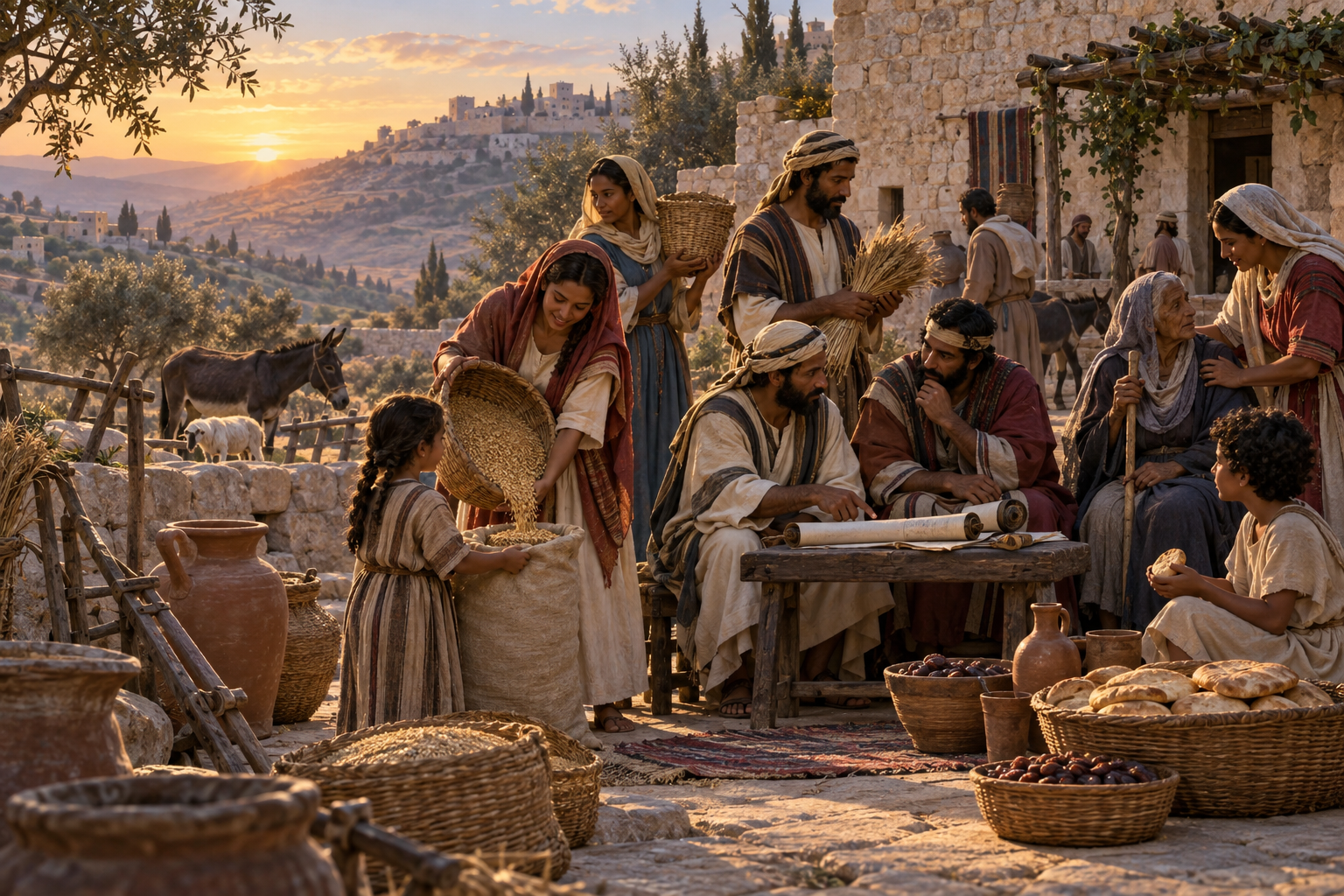
Periodic release, restored holdings and limits on permanent alienation of land challenge unchecked accumulation.
BIBLE • HISTORY • POLITICAL ECONOMY
A study of labor, property, debt, empire and collective liberation—grounded in biblical context, material history and Afro-Asiatic representation.
Open Report: Radical Change, Social Revolution & Gradual ReformNEW PRESENTATION / LUKE 4:18
A large-text study of Luke 4:18, people power and global liberation across all ethnic groups, with 21 profiles, photographs, charts and research links.
Open Report: Luke 4:18 & LiberationNEW REPORT / CRISIS & ECONOMIC JUSTICE
Crisis, consumption and the struggle for economic justice
A plain-language study with full KJV passages, complete-chapter reading buttons, and sourced charts on how capitalism responds to pressure and demands for justice.
Open Report: How Capitalism AdaptsREPORT / JUSTICE & STRUCTURAL CHANGE
When does justice require changing the structure itself?
Read actual KJV passages, sourced quotations from abolitionists, revolutionaries, reformers and Greek philosophers, historical photographs, and graphs on labor power and housing costs.
Open Report: Radical Change, Social Revolution & Gradual Reform01 / METHOD
This lens asks how people produced food, owned land, organized labor, accumulated wealth and resisted domination. It compares those material conditions with the Bible’s laws, prophetic critiques and communal practices.
Important distinction: Scientific socialism is a modern analytical tradition associated with Marx and Engels. Calling a biblical passage “socialist” is an interpretation, not a claim that ancient writers used modern theory.
02 / CORE THEMES
Periodic release, restored holdings and limits on permanent alienation of land challenge unchecked accumulation.
Workers must be paid promptly. Prophets condemn wealth built through exploitation and withheld wages.
Debt release interrupts permanent dependency and places social obligation above unlimited creditor claims.
The Jerusalem community shared resources and distributed them according to need.
The warning about monarchy describes conscription, taxation and appropriation by a ruling power.
Prophets denounce land concentration, market fraud and systems that turn poor people into commodities.
03 / HISTORICAL FRAME
Kinship households, rain-fed farming and shared survival shaped early Israelite society.
Royal administration, taxation, corvée labor and estate growth intensified inequality.
Judean communities rebuilt under Persian rule while tribute and debt remained material pressures.
Taxes, rent, debt and elite landholding framed the world of Jesus and the early assemblies.
04 / COMPARISON
Historical care prevents both romantic claims and easy dismissal.
| Question | Biblical materials | Scientific socialism |
|---|---|---|
| Primary concern | Covenant justice, communal obligation | Class relations and modes of production |
| Property | Possession bounded by divine and social duties | Social ownership of major productive forces |
| Exploitation | Condemned as oppression, fraud and injustice | Analyzed through surplus value and class power |
| Social change | Law, prophecy, repentance and communal practice | Organized class struggle and transformation of production |
05 / STUDY TO PRAXIS
1 Study the text in context.
2 Map present systems of ownership and labor.
3 Organize around shared material needs.
4 Build democratic institutions of care and accountability.
Justice is not only an idea to admire. It is a social relation people must practice, organize and defend.